The Secret to Zephyr Speed Is Apparently Classified
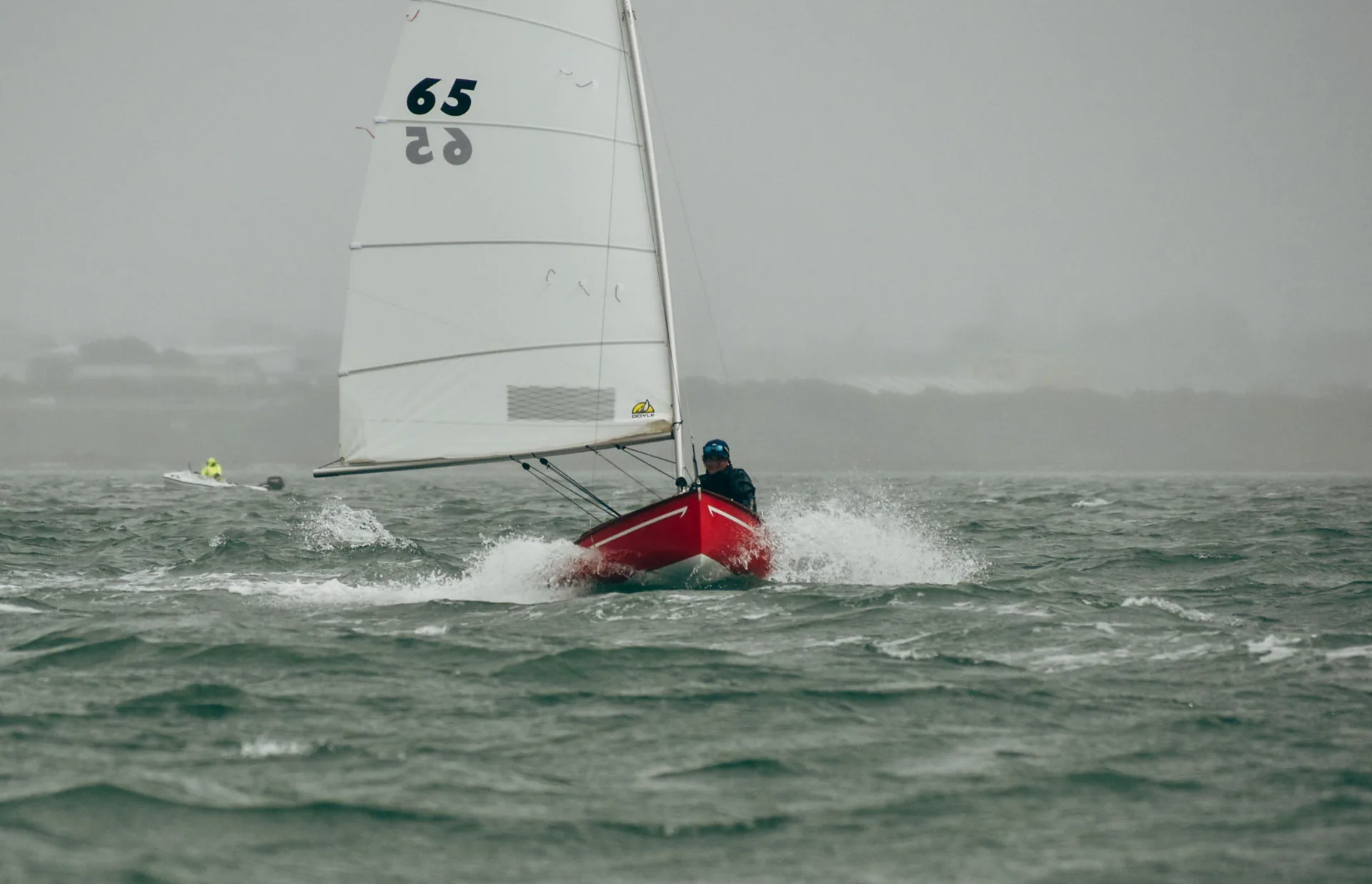
It’s been a week – to the day – since Julie and I lined up for another three-race session out of Point Chevalier Sailing Club against some seriously tough Zephyrite competition.
So why has it taken me this long to unpack the feelings and emotions of the day?
Because it was nuclear on the racecourse. Dogs off chains. False teeth flying. The sort of conditions where you don’t so much sail the boat as enter into a violent negotiation with it.
I think my fingers have only just recovered from the caning they received while holding onto the mainsheet like a devil clutching your soul.
While the physical effects of the day have finally started to recede, the emotions are still kicking strongly. Another race day, another successful climb towards discovering what my Zephyr, Julie, and I might achieve when we don’t drag a bottom lip around the racecourse.
The breeze was already up when 12 Zephyrs launched from the tidal ramp at Point Chev. Just getting into the boat was a challenge. Not destroying my brand-new centreboard and rudder was at the forefront of my mind.
A very close second was the rock wall.
That wall is career-ending. One wrong move and the splinters from the resulting carnage would continue washing ashore for decades. Future archaeologists would find them and conclude that Zephyr sailors were some sort of ritualistic seafaring cult.
They wouldn’t be entirely wrong.
Once safely afloat, I headed towards the course, where super-coach Brian Peet was already keen to offer a few final pointers.
“Crank that vang today!”
The thing about Julie is that all her control lines run below deck, ensuring her pristine outer beauty remains intact. Unfortunately, this also means I’m still tweaking the lengths of everything in her underbelly, trying to achieve maximum pulling power without accidentally dislocating a shoulder.
I did what Brian said. I cranked on the vang and began working the mainsheet during the pre-race build-up.
Everything was looking and feeling hunky-dory until I noticed that the bloody bolt rope at the foot of the sail, near the tack, had popped out and was slowly attempting to derig the main.
Awesome.
Time for an emergency repair, while also ensuring Julie didn’t eject me into the cold, shallow water.
I had to undo one rope, tie on another and pull the tack hard into the mast. The repair worked, technically, although it left my outhaul with only one setting:
All in.
I would have preferred a little belly in the sail to help punch through the chop, but Julie had other ideas. Today’s menu offered two choices: maximum outhaul, or go home and learn how to rig a Zephyr properly.
The repair also meant I missed the starting countdown. By the time I finally looked up, the fleet was already charging away and I was sitting comfortably in the back row, approximately 15 seconds late.
After reminding myself that it is, in fact, me who keeps putting me into these situations, I clenched everything that could be clenched and began the race.
I tacked onto port. Everyone else was going left, so naturally I went right. I had nothing to lose and decided to become a Vegas-level gambler.
Had I put money on that gamble, I wouldn’t have lost – but I wouldn’t have won anything either.
Still, I didn’t reach the top mark in last place.
I was equal last.
Progress comes in many forms.
Since Brian worked his magic on Julie’s rig, my upwind speed and height have become pretty exceptional. Downwind, however, I’m dragging a bucket wrapped in seaweed, attached to a concrete block, connected to an anchor that is firmly embedded in the harbour floor.
Whatever distance I gained upwind, I donated back downwind like a bag of unwanted clothing.
During the second race, I was smashed by a wave that appeared to force half the Waitemata Harbour directly into my right ear. I spent the remainder of the upwind leg looking like I was having a seizure, violently tilting my head and smacking the side of it while trying to dislodge the ocean.
While still picking crustaceans out of my ear and trying to work out how to claw back upwind everything I had haemorrhaged downwind – Brian sailed over. Ostensibly to discuss the racing, although I’m fairly certain he was actually conducting a discreet welfare check.
I gave him my most convincing salt-drenched smile: the strained expression of a woman who is absolutely fine, provided nobody asks a second question.
Then, in my loudest and least-pitched voice, I yelled:
“WHY AM I SO CRAPPY AND SLOW DOWNWIND?!”
You could see the cogs turning inside Brian’s brain, hidden beneath the extremely questionable hat he wears while racing. It’s the sort of hat that suggests its owner has either accumulated decades of sailing wisdom or is no longer permitted within 200 metres of a primary school.
Eventually, he yelled back:
“…… …… …… …… ……”
I’d love to tell you exactly what he said, but Brian made me promise not to reveal it. Zephyr speed secrets are apparently protected more fiercely than state intelligence, nuclear launch codes and the true ingredients of a petrol-station pie.
I can, however, give you a clew.
It required me to play with yet another piece of rope, because what I desperately needed in 30 knots was one more highly tensioned line to keep untangled while attempting not to become part of Auckland’s maritime missing-person statistics.
During the final race, I followed Brian’s classified advice—and lo and behold, it worked.
I didn’t overtake anyone. Let’s not turn this into a Disney film. But I also didn’t give everything away downwind, and I arrived at the bottom mark still in possession of several things I had previously been losing at an alarming rate: distance, dignity and the will to continue.
The biggest victory of the day, however, was that I didn’t go for an unscheduled swim.
There were moments when I was standing on the edge of the diving board, staring directly into the cold embrace of the Waitemata and waiting for Julie to complete the execution. Somehow, though, I kept her mast pointing vaguely towards the sun and avoided being fired through the sail like a badly dressed cannonball.
That, I think, was the achievement of the day.
I shit you not, we had gusts comfortably over 30 knots—which felt like 40 and, after the appropriate dramatic pause and a modest adjustment for storytelling inflation, could easily have been 50.
It was a day.
My sideline coach, Cameron Thorpe, has indoctrinated the “don’t worry about the results” philosophy so deeply into my psyche that I genuinely have no idea where I finished in any of the three races.
This is either a wonderfully healthy approach to amateur sport or an extremely convenient way of avoiding the truth.
What I do know is that things are finally beginning to feel like I’m racing a Zephyr, rather than trying to steer a deranged donkey after an excessive grain intake.
Julie is starting to talk to me. Not in a concerning, seek-professional-help sort of way, but through the helm, the sheet and the subtle changes in how she moves through the water. I’m beginning to understand when she’s happy, when she needs more power and when she’s quietly preparing to throw me over the side.
The good moments are lasting longer. The mistakes are becoming slightly less catastrophic. And every now and then, usually upwind, we look suspiciously like we know what we’re doing.
That’s the magic of Zephyr sailing.
You don’t need to be at the front to have an absolute battle. Somewhere in the fleet, there is always another boat to chase, another sailor to learn from and another tiny victory waiting to be claimed—even if that victory is simply arriving at the top mark equal last instead of properly last.
The boats are beautiful, the racing is close and the people are generous with their time, knowledge and completely unsolicited observations about what you’re doing wrong.
And they’re usually right.
So if you’ve ever considered joining the Zephyr class, stop considering and come sailing. You’ll find great racing, plenty of support and a fleet full of people who want to see you improve.
You may also lose some skin from your fingers, develop an irrational fear of rock walls and discover several entirely new ways to rig a boat incorrectly.
But you’ll come ashore smiling.
Eventually.
Once you can unclench your hands.
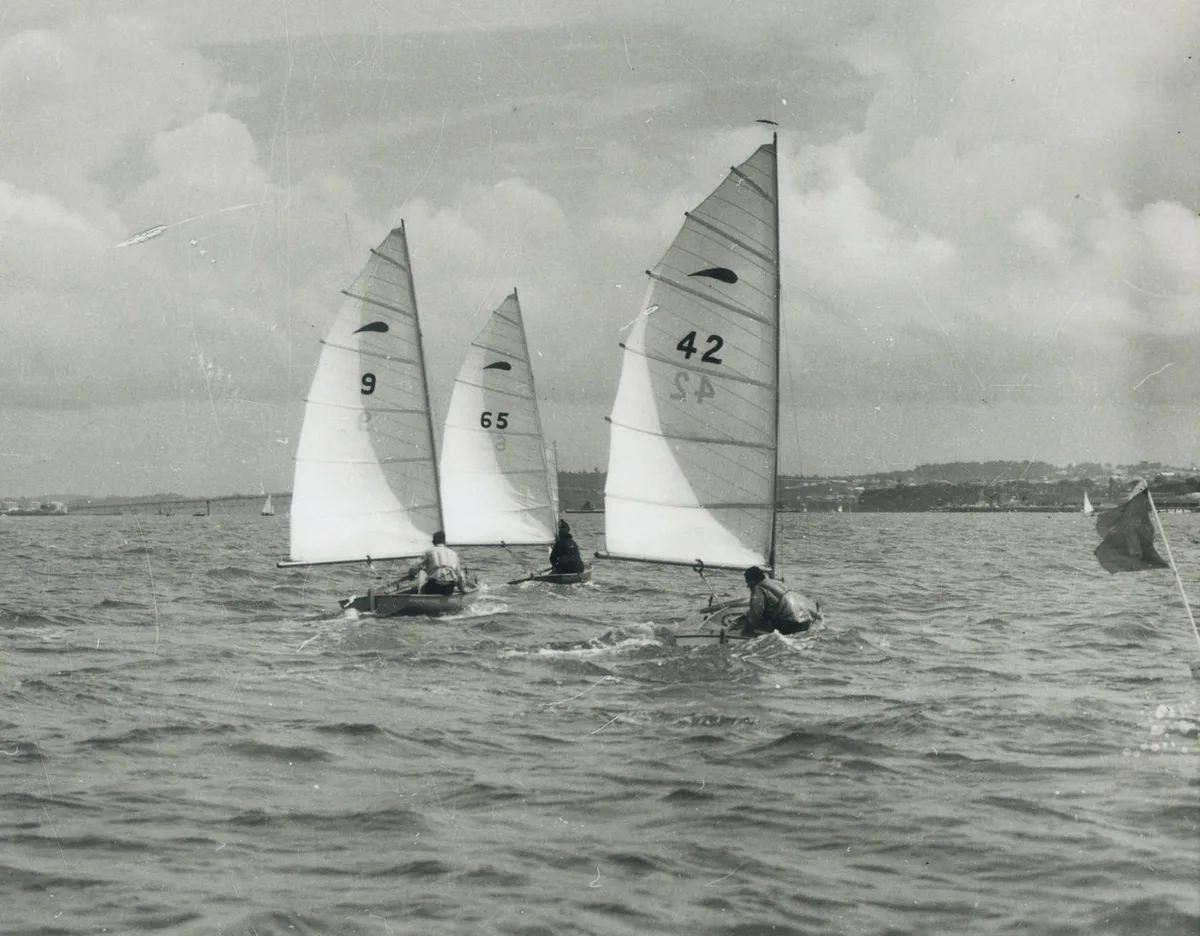
First Zephyr Nationals – Tamaki Yacht Club – 1959.
#65 looking like she enjoys being ahead! (Lies – this is before a start!)
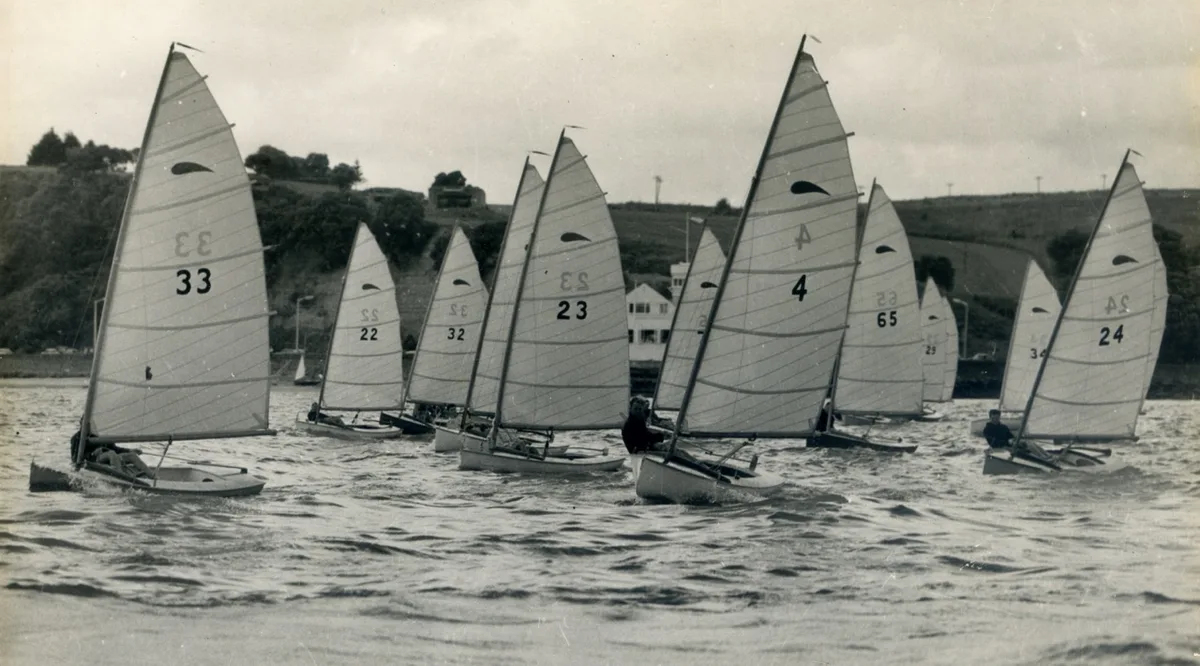
First Zephyr Nationals – Tamaki Yacht Club – 1959.
#65 Loving being deep in the fleet
See more Live Sail Die in Google: add us as a preferred source
Comments